How to Spot a Historical Fake Online: A Checklist for Viral Images and Quotes
October 30, 2026 - History
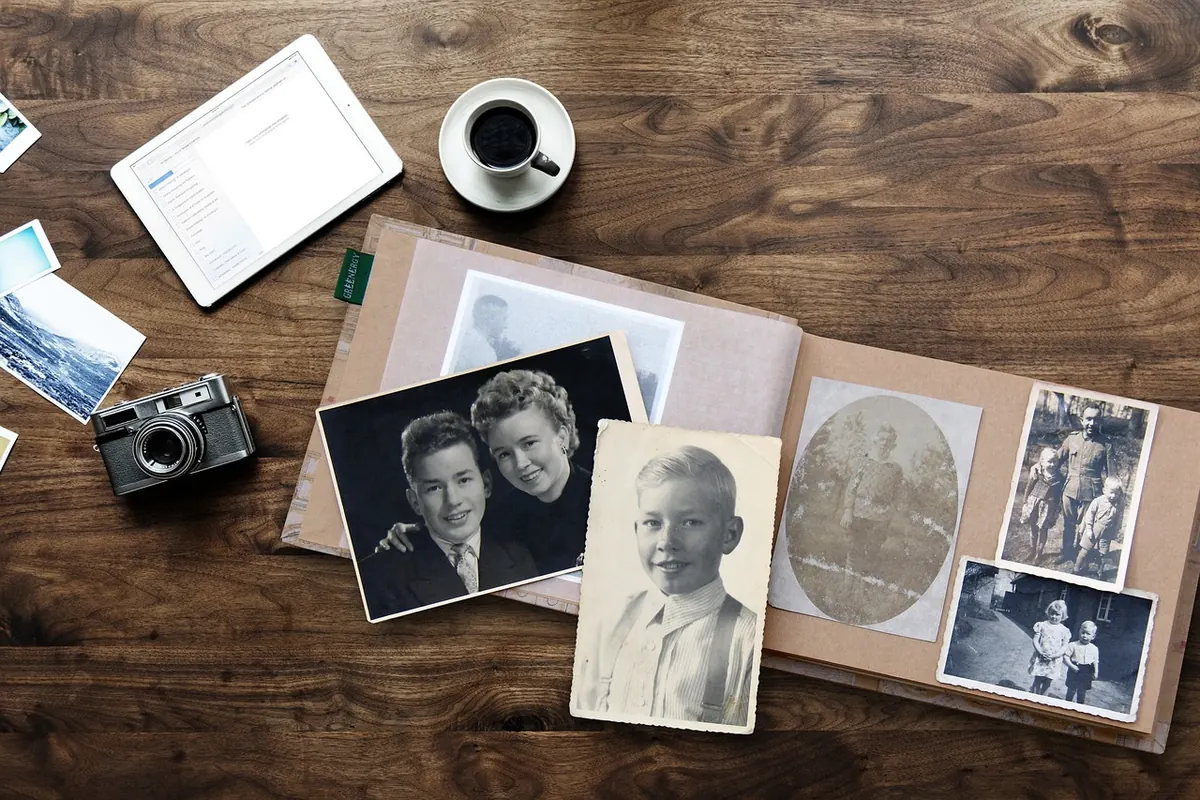
Almost every family history reaches a point where the tree grows faster than the evidence behind it. A distant cousin's online tree appears with a plausible name, a birth year, a village, and soon the line stretches back seven generations — not one of them checked against a document. The names may well be right. But in genealogy, plausible and proven are different countries, and the gap between them is where most research goes wrong. The good news is that the mistakes are few, repeated, and avoidable once you know what to watch for.
A published family tree is a set of conclusions, not a source. When a tree lists no citations, or cites only other trees, treat it as a tip: someone is telling you where to look. That is genuinely useful. It is not proof.
The habit that saves years is simple. Copy nothing you cannot trace. Open the tree, find the entry that interests you, and ask what record sits underneath it. If the answer is "another tree," keep climbing until you reach a census page, a parish register, a will, a ship manifest, a gravestone. If the trail ends in a conjecture, write the name in your own file with a note: unverified, from tree X, no source. That single annotation will stop you building four generations on a guess.
Contacting the tree's owner works better than most people expect. A short message — "I'm researching the same family; could you point me to the record for Mary's 1841 marriage?" — usually gets a helpful reply, and occasionally gets an admission that the line was a guess ten years ago and nobody has checked it since. Both outcomes are valuable.
Old handwriting defeats experienced researchers regularly, and it defeats beginners constantly. The long s looks like an f, so "Ross" becomes "Rofs" and "Blease" becomes "Bleaf." A looped e reads as an i. Capital S and L swap identities. Clerks abbreviated freely, spelled by ear, and wrote in a hand trained on a different alphabet from the one you are reading. A name transcribed three times by three volunteers can drift a long way from the original.
Dates have traps of their own. In England, Wales and the American colonies, the year began on 25 March until 1752, so a record dated "February 1730" was written before the year changed and corresponds to 1731 by modern reckoning. The same reform dropped eleven days from September 1752. If a will is dated after the death date you have recorded, suspect a calendar problem before you suspect a scandal.
John Miller born in the same county in the same decade as your John Miller is not necessarily your John Miller. In communities where a handful of surnames repeated across every household, a father and son, two cousins and a brother-in-law might all share a name at the same moment.
Before you merge two records into one life, build a profile. What was his trade? Where did he live, street by street? Which church did the family attend? What did he name his children? Where was he buried, and who else is in that plot? Then check whether the new record contradicts any of it. Names are the weakest identifier in genealogy; occupation, address, associates and naming patterns are stronger. When two records cannot be shown to describe the same person, keep them apart and note why. Separate files are easier to correct than a merged mess.
Indexes are made by human beings, and human beings misread handwriting, skip lines and mistype dates. A missing entry often means a missing index entry, not a missing ancestor. Learn to browse images page by page within the right district, then within the right street. Slow, but it finds people the index has lost.
Do not neglect the records that sound dull. Probate inventories name children and neighbours. Land deeds show migration and family alliances. Tax lists fill gaps between censuses. Church minutes and newspapers place people in a place at a time. A single probate file can resolve questions that ten years of census searching cannot.
Two hours of successful searching feels like the end of the job. It is the middle. A finding you cannot source is a finding you will have to rediscover, and you will not remember which of the six websites you were using in March.
For each fact, record:
Log your failures too. "Searched parish register 1800–1820 for baptism of Thomas Hall, not found, examined all pages" saves you from repeating the same fruitless afternoon in two years' time.
Write the source down while the page is open, or expect to spend an evening finding it again.
Old county histories and privately printed family genealogies are seductive, and often unreliable. Many were commissioned by the family to demonstrate a respectable lineage, and the earlier generations were assembled from wishful thinking. Read them as clues and background, never as authority. The same applies to the temptation to connect your immigrant labourer to a grand manor house because a surname matches.
Work one generation at a time, backwards, and only move on when the link between two generations is documented. Family stories deserve recording — with the teller and the date — but treat them as pointers rather than proof. DNA matches can confirm a relationship or unsettle a comfortable assumption, yet they identify a connection, not the paper trail that explains it.
Before each session, write one question at the top of the page: Who were the parents of Sarah Whitfield, married 1868 in Nantwich? Then work only on that question. Find the original record rather than a transcription. Record the source and the date in the same sitting. Note what you did not find, and why. At the end, ask whether the answer rests on a record or on someone's conclusion — including your own.
When a line stalls, widen the circle instead of forcing it: siblings, in-laws, neighbours, witnesses, the man who signed next to your ancestor on the marriage register. Relatives left trails. Tracing them is often how a wall comes down. And revisit the doubtful names in six months; a script that seemed unreadable in January has a way of becoming obvious in July.
Photo: Bellahu123 / Pixabay

A practical checklist for testing viral historical photographs, quotations and claims before you repeat them — from...
A practical guide to local festivals: how to ask before filming, follow rituals without disrupting them, dress for...
Copyright © 2026 Almanacco Di Tutti. All Right Reserved.