How to Spot a Historical Fake Online: A Checklist for Viral Images and Quotes
October 30, 2026 - History
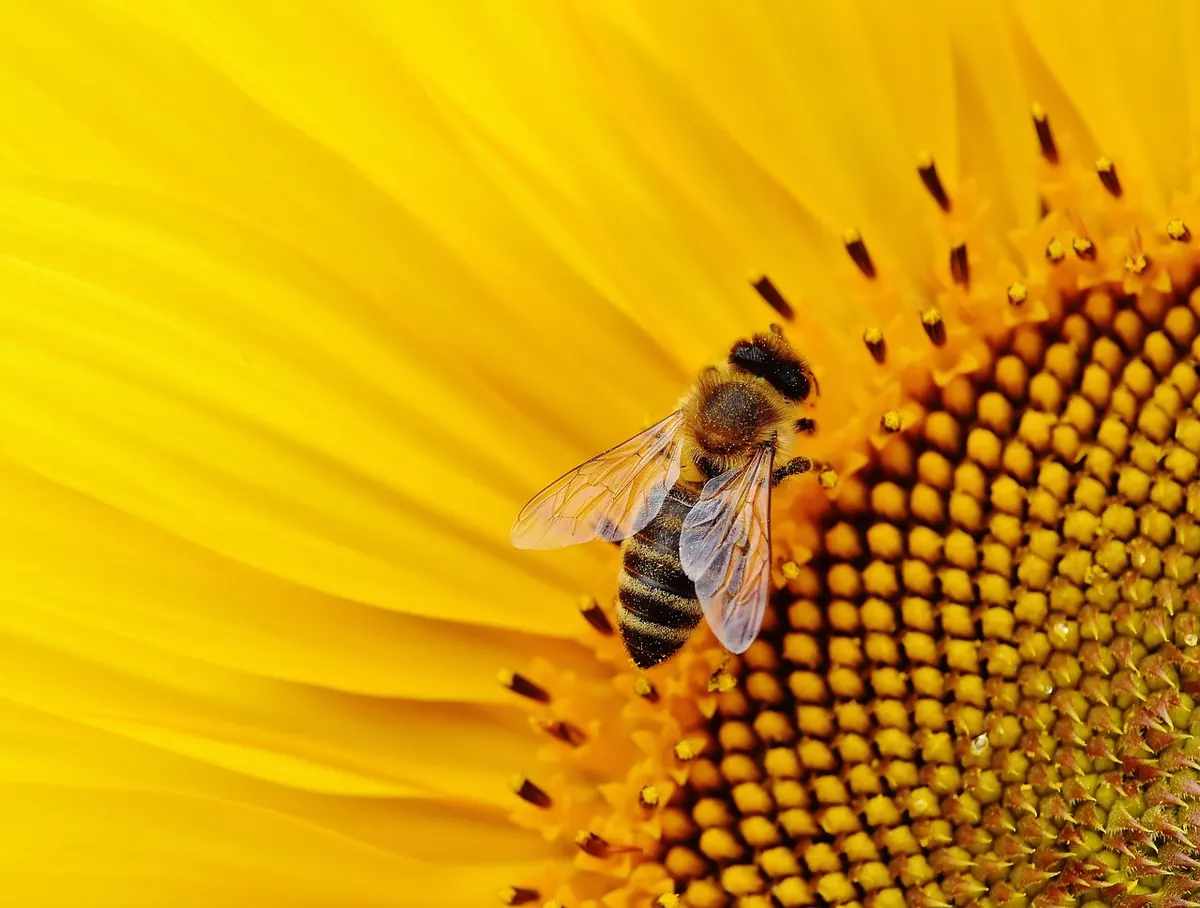
On a warm afternoon, a forager returns to the hive carrying a crop full of nectar. The inside of the hive is dark, crowded, and humming. She cannot point, speak, or draw a map. Yet within minutes, several nestmates leave and fly straight to the flowers she just visited. How? The answer is one of the most studied and most charming examples of animal communication: the waggle dance.
A honeybee colony can contain thousands of individuals, and only a small fraction are foragers. When a good patch of flowers appears, it pays the colony to send reinforcements quickly. But the inside of a hive is not a place for visual instructions. It is dark, warm, and packed with bees. The comb is often vertical, so a returning forager cannot simply walk across a flat map with a tiny arrow.
Instead, she uses movement, vibration, and scent. The dance happens on the comb, usually near the entrance, where other bees can follow. The dancer does not give a perfect address. She gives a direction, a distance, and a sample of what she found. The rest is up to the followers, who may fly out, search, and compare their own senses with the information they received.
The dance is a repeated figure-eight. The bee walks in a straight line while waggling her abdomen from side to side. Then she loops back around to the starting point and begins again. The straight part is called the waggle run. It is the part that carries the most important information.
From a distance, the dancer stands out because she is moving against the flow. Bees around her may stop, turn, and follow. Sometimes a small group of followers forms a loose crescent behind her, like an audience leaning in to hear a quiet speaker.
Honeybees use the sun as a reference point. But they usually dance on a vertical comb in the dark, so they cannot point at the sun. Instead, they translate the angle between the food source and the sun into an angle relative to gravity.
The rule is elegant. On a vertical comb, a waggle run pointing straight up means “fly toward the sun.” A run pointing straight down means “fly away from the sun.” If the run points thirty degrees to the right of vertical, the food is roughly thirty degrees to the right of the sun as seen from the hive. The dancer is not using a magnetic compass or a map. She is using the direction of gravity on the comb and her memory of the sun’s position.
That last part matters. The sun moves across the sky during the day. A forager that has been inside the hive for a while still needs to give useful directions. Bees can account for the sun’s movement using their internal sense of time and their sensitivity to polarized light, which lets them locate the sun even when it is hidden behind clouds or a canopy. The dance is not a frozen snapshot. It is a living update.
The second piece of information is distance. In general, the longer the waggle run, the farther away the food source. A short, quick run suggests flowers close to the hive. A longer run, with more side-to-side waggles, suggests a longer trip.
This is not a precise measuring tape. The relationship between dance duration and distance varies with the bee species, the terrain, and even the weather. A forager flying into a headwind may experience a journey differently from one flying with the wind. What matters is that the dance gives followers a useful estimate, not an exact number.
The dancer also carries the scent of the flowers she visited. Followers can smell it on her body and antennae. Some may taste a drop of nectar she offers. The dance tells them where to go; the scent and the sample tell them what to look for when they arrive. A forager can also adjust her dance according to the quality of the food. A rich, concentrated nectar source may inspire a more vigorous performance than a poor one.
The waggle dance is the most famous form of honeybee communication, but it is not the only one. Bees live in a crowded, cooperative society, and they use chemical signals constantly.
For food sources very close to the hive, bees sometimes perform a simpler round dance. It lacks the strong directional message of the waggle run, but it still carries scent and excitement. Followers may leave the hive and search nearby, guided by the smell of the flowers.
When a bee stings or senses danger, she releases alarm pheromone. The smell spreads quickly and puts nearby bees on alert. Other pheromones help the colony recognize its queen, cluster together, or find the entrance. These chemical messages are slower than a dance but they linger, which makes them useful for keeping a large group coordinated over time.
You do not need a laboratory to see this behavior. An observation hive at a botanical garden, a county fair, or a beekeeper’s apiary is often enough. The key is to watch the right part of the comb and to stay calm.
The waggle dance is a reminder that communication does not require words. A small insect can turn a patch of sunlight, a memory of flowers, and the pull of gravity into a message that sends her sisters out into the world. Once you know what to look for, a busy hive becomes a room full of conversations.
Photo: Alexas_Fotos / Pixabay

A practical checklist for testing viral historical photographs, quotations and claims before you repeat them — from...
A practical guide to local festivals: how to ask before filming, follow rituals without disrupting them, dress for...
Copyright © 2026 Almanacco Di Tutti. All Right Reserved.